My old new old house

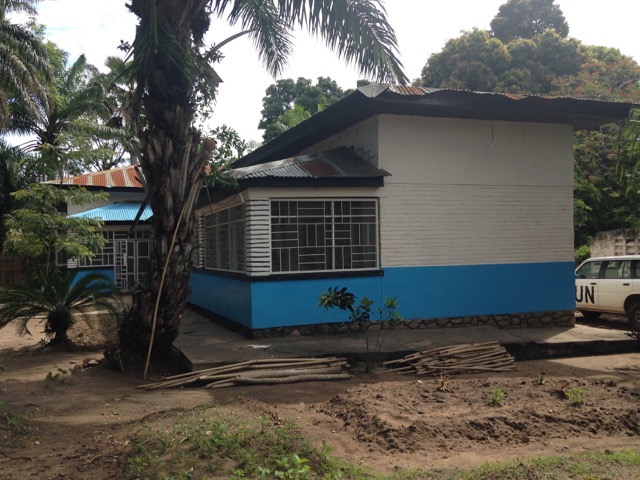
In December 2016 I wrote a piece about “my new old house”.  Three years later in December 2019 it became my “old new old house” when I left Kalemie.  It’s taken me this long to get round to writing another piece about it, perhaps because I knew it would evoke strong feelings of nostalgia and homesickness. Even though it was not love at first sight by any means, when you invest large amounts of time and energy in caring for and restoring a dwelling place, you form a close bond with it.  Inside and out, my house gradually cast off her sad, neglected stoop and became a welcoming and cheerful sanctuary, not just for myself and my partner, but for various friends/colleagues and short-stay visitors. 2017 saw the most intensive works, against the backdrop of an escalating recurrent inter-ethnic conflict that spread throughout the province.  I stopped blogging about my work and life in DRC at this point. At the time, there were very few appetizing eateries in Kalemie or indeed many cultural opportunities, so renovating the house became a major project and much-needed antidote to work.  And indeed, the project continued well into my third year.

As I love cooking (and eating), it was natural that the gloomy kitchen with its old rotten wood and dark green walls was the first to be renovated once the windows, doors and mosquito netting had been repaired around the whole house and a new shower and toilet installed.  As impatient as ever, I didn’t want to wait for the housing company, Filtisaf (which I wrote about in my previous piece), to agree to get going.  If I’m honest, I preferred to work privately with my Congolese colleagues from the engineering section both for the design and the implementation. A more expensive but much more gratifying option, and I was delighted with the results. In the event, I ended up leaving B to project manage the work while I went on leave in February 2017.  M the carpenter and P the mason worked in tandem to make and fit new units and work surfaces, with white and light blue tiles on and around them and a combination of pale blue and mostly off-white paint on the high walls.  A long shallow shelf ran from the left of the cooker for all the dried herbs and spices I brought back from London.  The two cupboards on the sink wall had glass-paned doors and were separated by a third open unit with a rail across the top. I regaled it eventually with a full complement of cooking utensils hanging from chrome S hooks (courtesy of Ikea).  We even had a make-shift cocktail bar by the window, consisting of a deep wooden shelf and two tall stools which tucked neatly underneath it.  It wasn’t perfect, of course: some of the cupboard doors stuck a bit due to M going overboard with the varnish and no slick, self-closing drawers. But it was bespoke and locally resourced and made, so I was more than pleased.  Z the electrician installed four new bright lights (for energy-saving bulbs) three quarters the way up the wall at equal intervals, coming to the rescue of the single and rather feeble existing ceiling light.  Being on leave, I hadn’t had the stress of getting the workmen to coordinate their appearances on site, which I learned was rather eye-watering! On the recommendation of a female Congolese colleague, I found a local seamstress, who came to the market with me to choose fabric for a long, blue and white checked gingham curtain she sewed, beautifully lined in plain white cotton at the back to cover the whole length of the half-glass paned door to the guards’ quarters (no more “Bonjour Madame” as I shuffled bleary-eyed and incapable of speech into the kitchen to make my early morning tea!) She also made a net curtain to cover the window by the sink.  J, in her late thirties, had found herself widowed less than 18 months previously due to sudden illness and had several children, including young ones. I was hugely grateful both for her sewing talents and her gracious patience in trawling around the markets and shops in the heat of a Saturday noon.  Her serenity was intriguing and I was in awe of her strength as she leapt deftly up onto work surfaces to take measurements.  She went on to sew curtains for other rooms as well as clothes for me.

Coming back to the kitchen, I retained the huge dark wooden dresser along the length of one wall for good storage space, having the carpenter to give it a lick of varnish (he liked varnish a lot).  The real anomaly in the kitchen was the red painted floor.  Red doesn’t usually match with blue, but somehow I decided I quite liked the cheerfulness of the red and so just got it repainted the same colour by A the painter (the same applied to the lounge and bedrooms).  A few months later, the old fridge finally gave up the ghost and I replaced it with a brand new, state-of-the-art (ha ha) chrome one.

A the painter did a lot more painting inside and outside over the coming months, including the bathroom, whose UN standard-issue blue was replaced with pale pink paint with neutral, beige-based tiles around the bath and sink.  Okito the plumber installed a large new sink and came many times for other odd repairs, as well as more major jobs on pipes outside, including a vent pipe for the cesspit. My decision to tile over the red painted concrete floor was hastened when workmen sent from Filtisaf to unblock the toilet thought it a good idea to dig a big hole in the floor! I came home from work during the lunch hour and gasped to find a mound of rubble and earth in the middle of the bathroom. It turned out the cleaning tablet hooked onto the rim of the toilet bowl had been flushed down and blocked the bend. Anyway the end result was a good makeover.

Water was delivered to the (rather undersized) water tank two or three times a week by my MONUSCO engineering colleagues, which worked fine until my French “Life Support” colleague (who organized the rota) was replaced in 2019. No fun arriving home late and sweaty from a field mission and discovering water hadn’t been delivered and had run out and that the Jerrycan reserves had also been used by the guards.  Back in London, I still find myself economizing on water. Another small carpentry job when the old ladder up to the water tank broke.  I never got round to organizing a larger tank; that’s for someone else to do.

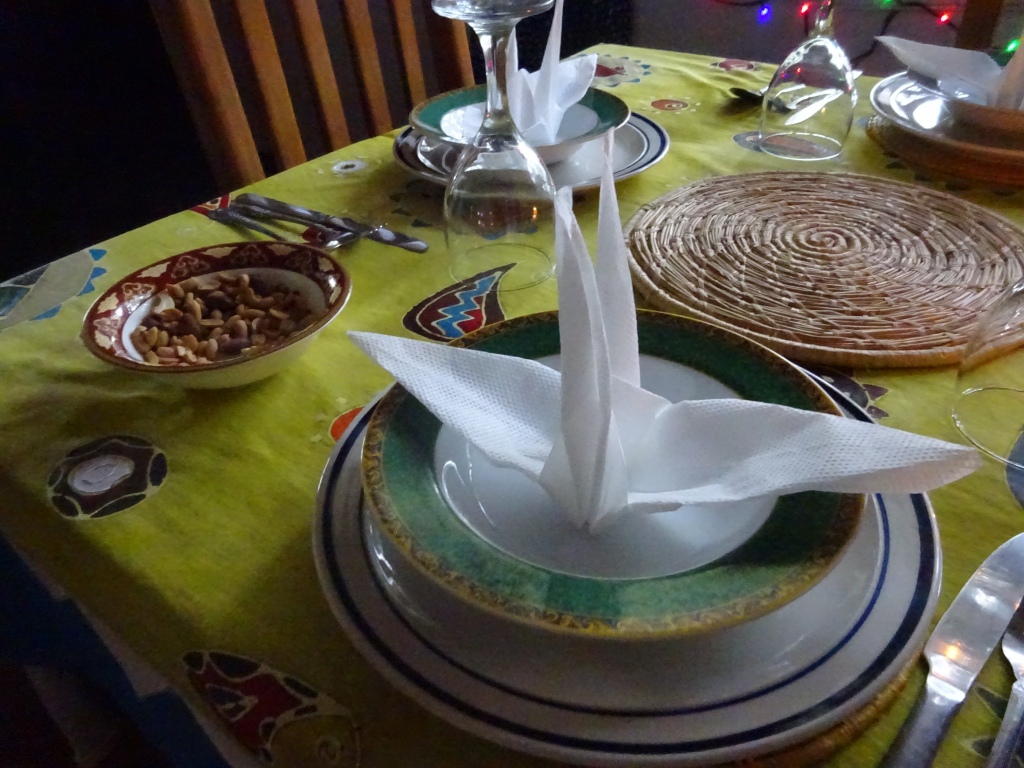
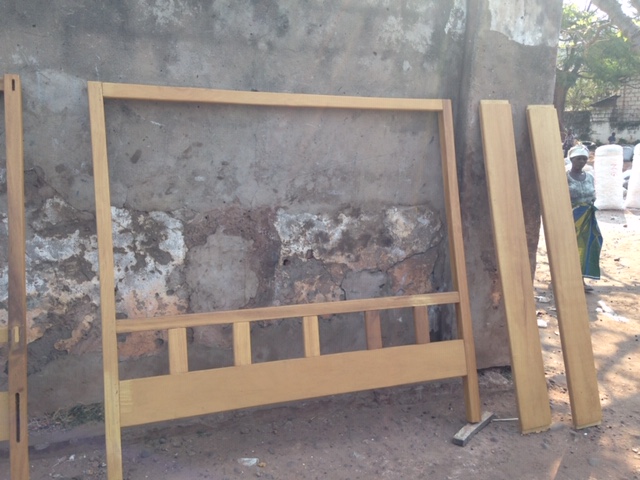
The only other job I got Filitsaf to do inside the house (they did later do a good job of replacing the garden perimeter fence) was to paint the lounge and two of the bedrooms. I should have learned my lesson after the bathroom episode. Once again I left B in charge of managing this while I was away, and once again, he had a nightmare keeping them on the job and getting them to finish before I returned. To my (not immediate) amusement, I found that instead of removing the pictures from the walls, they just painted around them!  Otherwise it was all freshened up. I replaced the garish pink curtains in the bedrooms with the decent plain beige linen ones from the lounge, which in turn were replaced by new ones which J sewed for me from traditional colourful Congolese fabric known as “pagne”.  I covered the shabby but sturdy dining table with a colourful yellow and turquoise waxed tablecloth I found at Entebbe airport and had six wooden and upholstered chairs made bespoke in a carpentry workshop at the bottom end of town, the same place that made a beautiful four poster bed to fit the extra large mattress I had inherited from the previous occupant, an Iraqi colleague (one of the decent things among the pile of stuff he “flogged” me!)

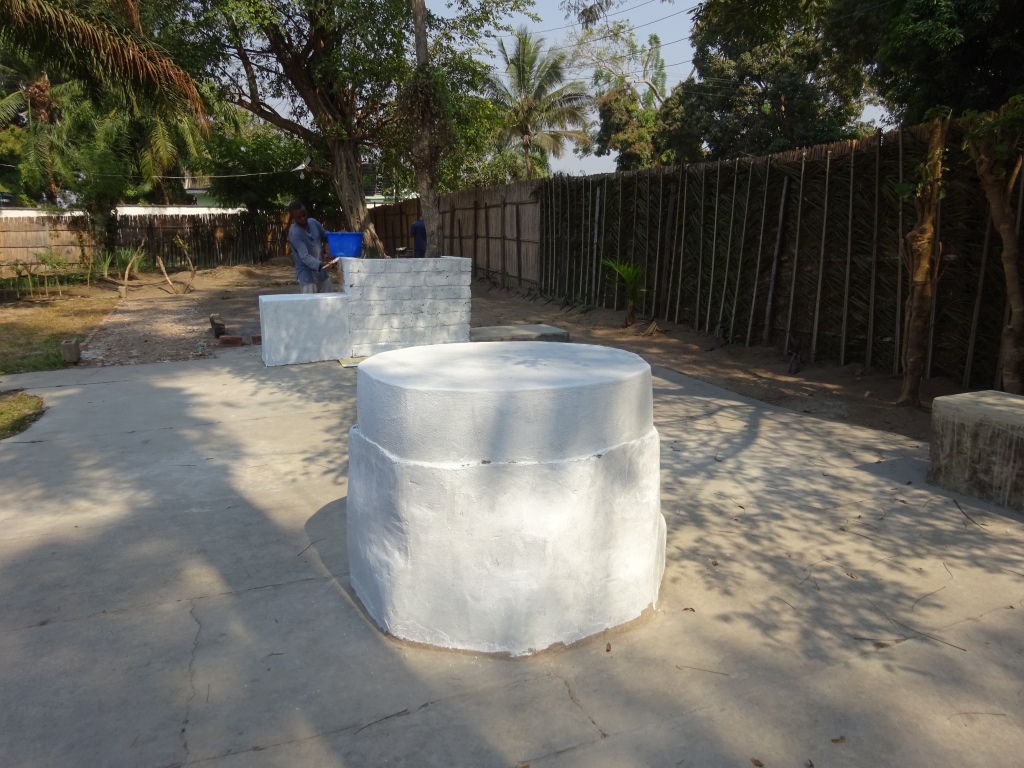
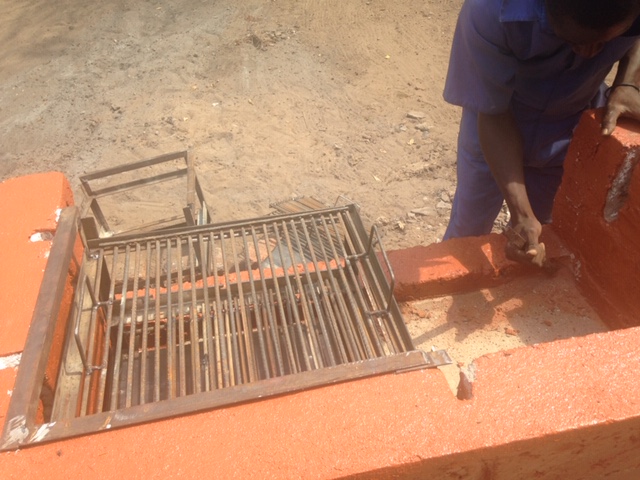
Turning my attention to the outside, I got a welder from MONUSCO to work with the mason to build a brick barbecue in the garden, and painted it the same terracotta colour as the walls on the patio and the random concrete block in the middle of it (I never found out its original purpose); and I used the same colour to once again replace the UN standard-issue blue on the external walls of the house. 

In general, whilst the garden greened up, my guard’s ongoing efforts over three years at growing vegetables and herbs were not highly rewarded. With the exception of the maize, one crop of Swiss chard and a single butternut squash, the most we got from the garden were herbs such as celery, parsley and basil. The soil proved to be difficult to coax and my guard swore that the green flies from the trees above were the main culprit. As work became more and more consuming, we kind of gave up on the garden, just letting J continue with his efforts, joking that these must be the most expensive herbs in the world!  At least he kept the garden and the paths well-swept and helped to prop up the flimsy bamboo fencing around the perimeter when the wind threatened to blow it flat (which it did one time, making me realise that the fencing was purely a barrier between the house and the road that provided privacy but certainly no real security).  Other outside improvements included a concrete shed with vents to house the generator and a proper shelter for the guards next to the front gate.

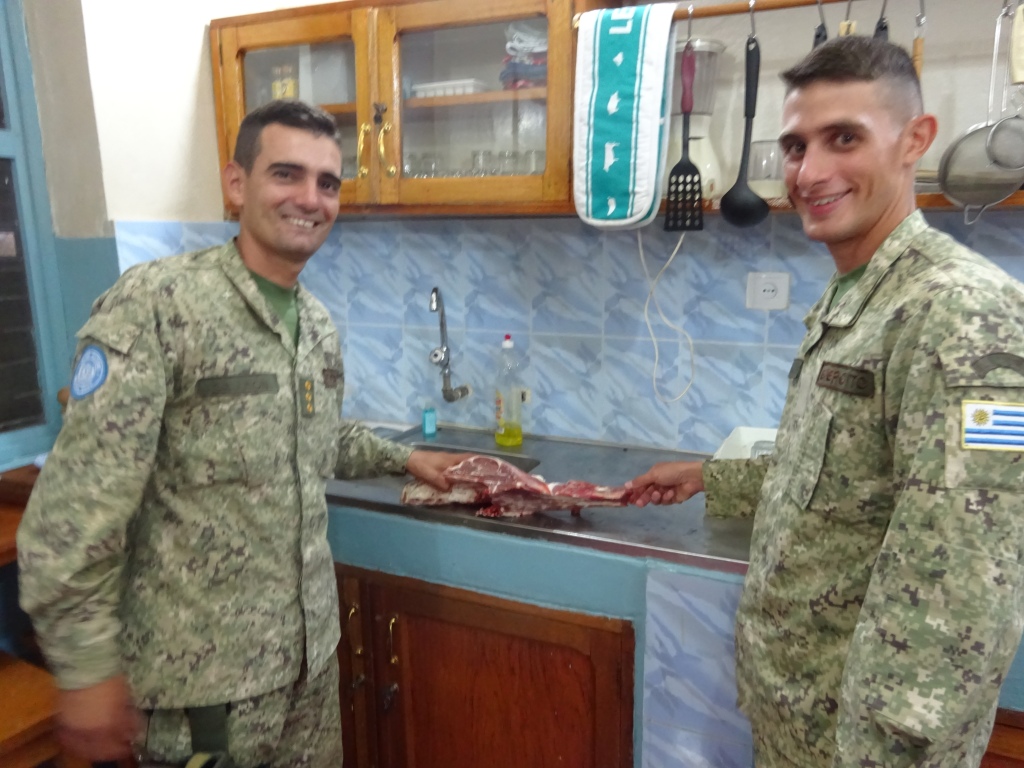
In September 2017 we had a barbecue to celebrate the general spruced up-ness of the house and garden, inviting all the workmen, even though not all of them could make it.  It was a Sunday afternoon and I was surprised and somewhat deterred by the swarms of flies that appeared and dive-bombed our plates.  I counted a total of 24 on one plate. I learned that the end of the dry season is particularly bad for flies. My Congolese colleagues seemed completely non-plussed as they tucked into the goat kebabs and fresh fish from the lake.  A good number of barbecues ensued over the next two years or so, with my Civil Affairs team and other colleagues and friends, including the fantastic Uruguyan water purification colleagues and later Uruguyan and Indonesian troops, as well as visitors from Goma and elsewhere. I wished that my dear colleague and friend Marion, whose successive apartments in Goma provided me with “home from home” on so many occasions when I passed through, could have come to stay more than the one time, and that she could have brought the lovely dancing Flavio with her. For the future….

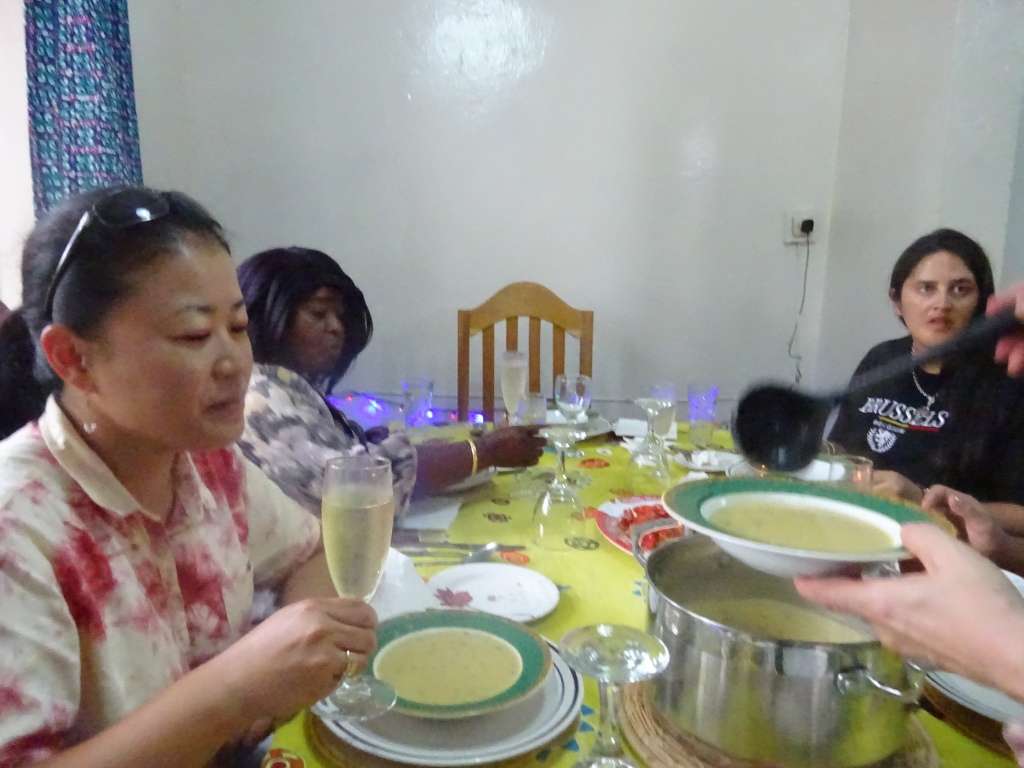
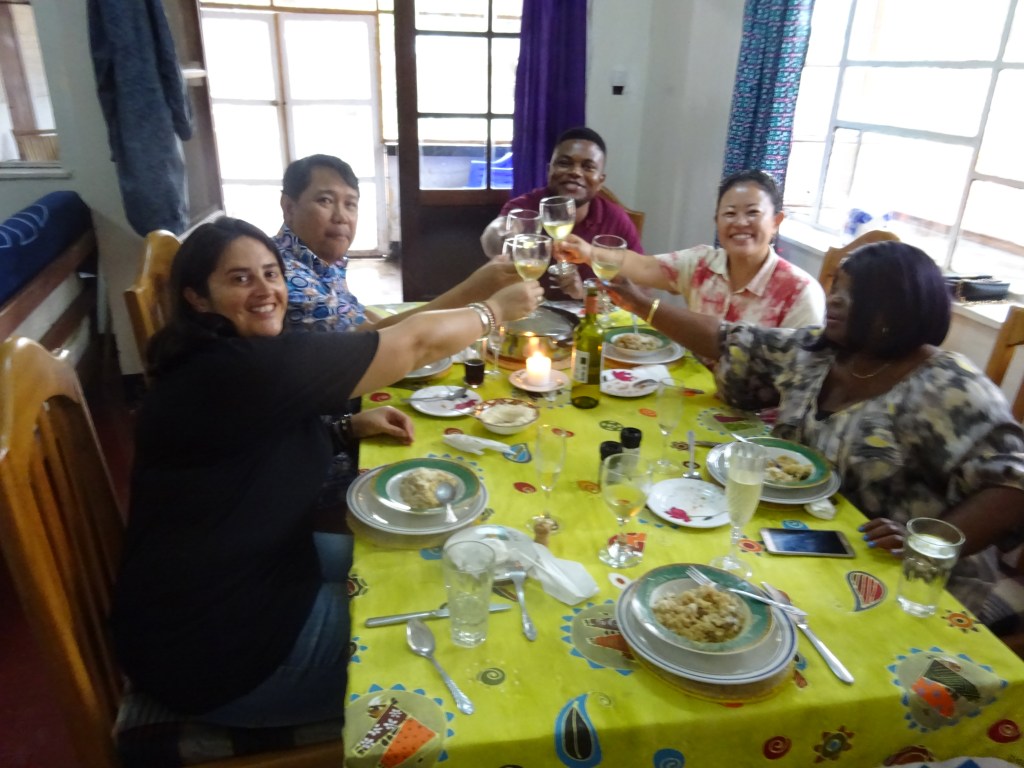
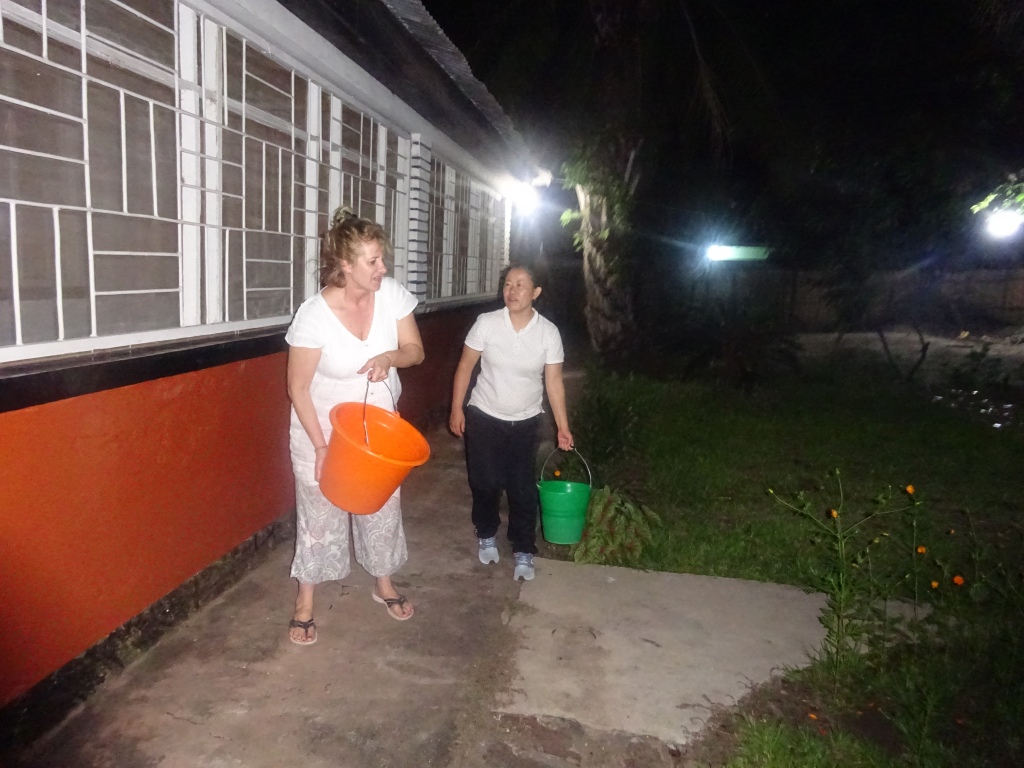
Christmas 2017 was a time of much celebration and enjoyment of the renovations.  The kitchen especially, from where a veritable feast was produced for Christmas lunch for six, sat on the spanking new and comfortable dining chairs (just as well, as a new sofa for the lounge had not been sorted).  While the rain bucketed down outside, we got very merry and I ended up playing my tenor recorder and giving a rendition of the Welsh national anthem, which probably bemused the neighbours.  Around this time, we appreciated the frequent dinner company of Yoko, irrepressible Japanese colleague from IOM, who was stuck in the MONUSCO “guesthouse” (where I stayed for the first three months in Kalemie in 2016) and who much appreciated the chance to cook fresh food in a homely kitchen.  How we loved her stir-fries – and she bequeathed us her rice cooker when she left, all too prematurely. And dear Libia from Uruguay, who made us laugh so much, dancing in her army boots and with her limited language other than Spanish, yet expressing so much and putting us to shame with her efforts to learn Swahili.  We three women spent New Year’s Eve 2017-18 dancing wildly around the house to Cindy Lauper and finishing off Yoko’s bottle of Yamazaki 12 year old whiskey. Yoko dressed a couple of (frozen) chickens beautifully in Japanese style for the barbecue, only for us to discover they were actually off when we came to eat.  Thankfully Libia had rustled up some homemade pizza. When the hour of midnight approached, she showed us a New Year’s Eve tradition of throwing a bucket of water over the garden to represent the sloughing of all negative energy and events from the previous year. Somehow I ended up flipped on my back and soaking wet, amidst a lot of hilarity.  Two of my four guards on duty that night took great delight in joining in and we repeated the ritual the following New Year’s Eve, which, however, wasn’t quite the same without these wonderful women.

It was early 2019 before I finally got round to getting a sofa made for the lounge. My friend Liz, who was dying back in Somerset, insisted that it was not too late. And she was the Queen of home-making. An L-shaped affair which suited the space perfectly.  I chose a smart, tartan-style fabric, hoping it wouldn’t clash too much with the curtains, and made sure there were no pieces of wood at the top of the back cushions. I sent her photos and she highly approved. My only regret was that I hadn’t done this earlier because, together with the cheerful fluffy new rug and bespoke wooden coffee table, it totally transformed that half of the lounge.

If anyone had told me in 2016 that over the next couple of years, I would be so mad as to carry things like curtain poles from John Lewis (I’m not subsidized by the UK taxpayer I assure you!) and large floor lamps from Ikea in my suitcase, I wouldn’t have believed them.  “Démenagement” (meaning house move) is the word B used to describe my “kitchen sink”-style travel. It felt like Christmas every time I returned from leave with supplies both of the edible and non-edible kind.

I tried to get Filtisaf to reimburse me for the renovations and improvements – after all it was an investment in their property, not mine!  They did in some small part and paid for a few things like the dining chairs and sofa.  But they found it an affront that I had not trusted them to do all the works and that my UN colleagues had “profited” from it.  At a certain moment, they flatly refused to “contribute” any more (I had deducted a small amount from my rent each month for a year), and no amount of arguing with them would change their mind.  For my part, as the rent was not onerous, I decided that this would be part of my attempt to be a contributor and improver and not a taker, in a place where so many had already taken so much. Nonetheless, they admitted that the house had been totally transformed and by the time I left, they were openly happy about that. Madame O who was the real mover and shaker in Filitisaf, even had tears in her eyes when she popped round to say goodbye and I was having a barbecue with B, my guards, Maman E, my “bonne”, and my Italian colleague who was about to take over the house.  “You’re all family here I see”, she said.

Nine months on, I still miss sitting of an evening on the old canvas deckchairs in the covered veranda called the “buanderie” (laundry), exhausted from the day and downing liberal amounts of G&T (how colonial, sorry).  Was it an omen that both deckchairs gave out within a short time distance from each other towards the end of 2019?

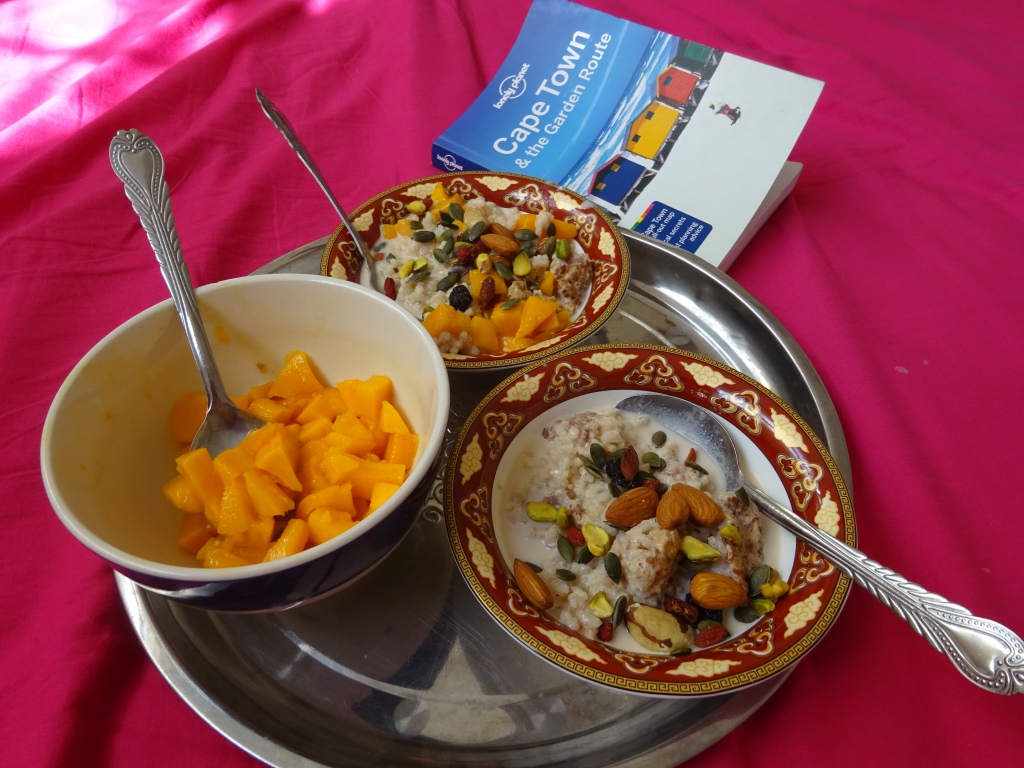
I miss bringing a tray of home-made rice pudding and coffee for Sunday morning breakfast in bed; I miss the hearty brunch spreads on Saturdays. I miss the family feel of the guards and my cleaning help (I can’t find a good way to avoid using the “maid” translation of “bonne”), who sometimes drove me mad with their constant demands and issues. I’m not talking about the tragic deaths of their infant children or the string of illnesses and calamities like houses collapsing in the rains; but rather the requests to intervene in arguments among them or injustices regarding their work contracts with the security company. The intensity of working on the house alongside a demanding job over these few years, was exhausting, and B got fed up of Saturday morning lie-ins interrupted by yet more repairs or improvements.  But it was deeply satisfying, even now as I look back and see the photos.

I can’t say I miss the noise around the house: the cacophony of funeral wakes which kept us awake all night with ear-splitting amplified music; of evangelical preachers whose ranting before daybreak was broadcast from loudspeakers in the centre of town (I would love to have seen them locked up instead of the teenage boys I visited in the prison); of the roaring of the generator during power cuts; and even of the grating cawing of crows in the garden and the bleating (more like wailing) of next door’s goats when desperate to have a lie-in.  But I do miss the fullness of expending one’s life energy in all directions and hoping that it’s somehow making a small difference for some fleeting moments.  I’m sure I will return once more to this frenzied life, at least for a season, while I am still fit and able.

I have reflected a lot on why I feel it matters to whom you hand over a house that you have really made a home.  I suppose quite simply because you have invested yourselves, part of your souls in it. And that part stays behind. Serendipitously, as the date for beginning my special leave approached, a new colleague arrived in Kalemie who was looking for just such a home. He’s Italian and loves cooking too. And he is kind and decent, so will treat the guards and Maman well. This matters.

In grateful memory of Okito the plumber, who sadly died in July 2019.

And in grateful memory of my darling Lizzie, who showed me how to build a nest.

Island hideaway

Already August and it’s the first blog piece I’m writing this year, to my chagrin. My intention is to write some other pieces retrospectively. The road to hell and all that… Work in Congo sucks me in and then I come up for air every six weeks, by which time I’m usually too knackered to think in whole sentences. A poor excuse for a writer I know.

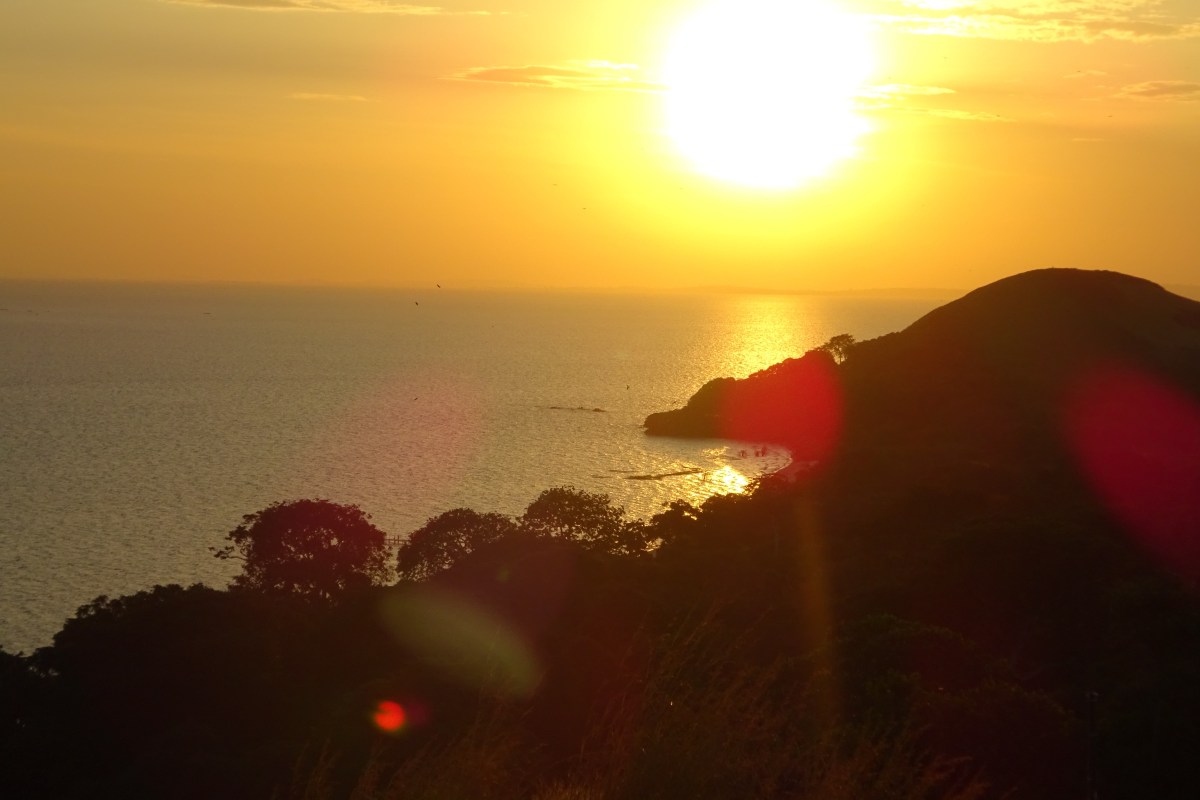
The main picture of this piece is taken from one of the two hilltops on Bulago Island overlooking Lake Victoria in Uganda. This is the third time I’ve come here to watch the sun set in six days, and this afternoon I came earlier to write. I discovered this gem of a hideaway back in April, on the recommendation of Pamela and Johnny, who created a beautiful resort in one bay of the island and called it “Pineapple Bay”. I met Pamela (Canadian) by chance at the Boma Hotel in Entebbe on my return to Africa early November last year after my long sick leave. Six weeks later, I was back in Entebbe on R&R in the run-up to Christmas and received an invitation to visit Pamela and Johnny and their family in their sumptuous lodge-style home they built in a village about 20 miles east of Kampala. Johnny (British) was born and lived in Uganda until the age of about ten, then felt a strong urge to return there after finishing university. They have been here for 20 years and built up a business in the safari lodge line. Pineapple Bay is a bit different from their other enterprises, but it has their hallmark of tasteful design and solid wood furniture all over it. Having been requested to work over Christmas and New Year, I welcomed this breath of family and generous hospitality, eating good food, curling up on the cushions of the giant-size wood sofas and swimming in the company of Finn, their gorgeous black Labrador (who reminded me of darling “Mackie-boy” at my friend Sian’s Dad’s place in Derbyshire).

So fast-forward to April, when I finally made it to Pineapple Bay. I set off from Entebbe in a small but speedy boat, clad with life-jacket and too much luggage (very unlike me), having gone first to Johannesburg to pick up stuff I’d left there in February – and return Tony’s house keys (I will get round to writing a piece on Jo’burg retrospectively too!). Having made the detour, I now only had two nights on the island, and I was really in need of a longer rest. I vowed I would return. No cars, no motorbikes, no loud music in the early hours (or at any hour). Sturdy, spacious chalets on the lake; actually almost in the lake. Some photos B discovered yesterday made us realize that the lake has encroached considerably since they were built a few years ago. One speculation offered by the site manager is that it was due to a hydro-electric plant being constructed over in Jinja but that now the water is subsiding again. There used to be about 20 metres of sandy beach in front of them. Thankfully a bit of sandy beach remains on the other side of the swimming pool and in small stretches around the island, which is about 500 acres.

I have already fast-forwarded to now, August, and the island has not disappointed. This time I took the boat from Kampala (after the obligatory stocking up on food supplies for Kalemie) and I came with B, my sweetheart; that’s all you need to know about him! Pineapple Bay is restful, romantic with its swaying palm trees over the swimming pool, the borrowed landscape of the lake directly behind it, the hammocks on the beach and lawns all around. It combines a good dose of luxury and the ease of full-board with the simplicity and air of an eco-style resort. There is a flock of sheep in the gardens, rabbits, several families of ducks and a fascinating array of birds on the lake shore and hilltops of much character, who have provided round-the-clock entertainment: Egyptian geese, Hammerkops, Kingfishers, African openbill storks, crowned lapwings, black-and-white casqued hornbills, ibises, snake eagles, egrets and many others. You awake to the sound of the lake in the early morning breeze, and at night the pitch black remains unpolluted, with soft lights inside and oil lamps outside, guiding your path “home”.

Even though three or four outings pretty much covered the whole of the island, it was still fun to explore, especially in good company. Cycling through forest, climbing hilltops in the hot sun followed by an unruly descent back to base and a plunge into the pool is the stuff of good “R&R” I reckon. I was surprised to discover so many houses on the edge of the forest and along the lake on the other side. The first morning we went to the “village”, which comprised a cluster of huts in a clearing and seemingly very poor people subsisting from fishing. A man in bare feet wielding a bottle of beer sprang up from the rough outside table where he was sitting with an old woman, a younger woman and a small child perched on top of it, and proceeded to guide us through the village. He seemed drunk. He showed us the church, which was a dark stuffy room with stone floor, about eight chairs and a make-shift altar. Unable to converse with him or the other villagers we met, and being asked for money, made me feel uneasy. I also felt uneasy to experience that bizarre juxtaposition of wealth/luxury and grinding poverty, not for the first time of course. Does any of the money made in Pineapple Bay go towards improving the lives of people on the island? I don’t know. Maybe it provides a limited number of jobs. But then what about the people sleeping rough outside designer shops in Mayfair, London? Is that not the same phenomenon? We kept finding empty packets of (I’m assuming cheap) gin around the grassy paths. Is that the equivalent of the flagons of (also cheap) cider I used to swig on the old railway lines in the South Wales Valleys as a teenager?!

On a lighter note, apparently there is a resident crocodile at Pineapple Bay! B thinks he caught sight of him this morning when we were nosing around the end chalet which suffered heavy damage by the encroaching lake and is now being renovated. The water on the far side of the chalet has created a kind of swampy lagoon, perfect for prowling amphibians, as my memories of Tarzan serves me (there are some wonderful old posters of Tarzan films in the dining room). The reports of him gliding through the resort when the water is calm were confirmed by the Marine Police whose dwelling place we stumbled upon with our bikes. Another good reason not to swim in the lake.

The sun is starting to set to my right. By 7pm it will be more or less dark. One hour later than in Kalemie. That extra hour of daylight makes a difference I find. The pale moon is almost full to my left, ready to light up when dark will descend under the invisible snuffer. All I can hear are birds and noisy crickets. Am hoping that B – who wandered off with the camera to let me write – hasn’t been eaten by the crocodile. In my (albeit limited) experience, Africans are accustomed to walking in the dark; I’m not sure a Welsh woman on a bike with no lights wobbling down an uneven forest path in the dark is such a good idea, but we will see…. I am reluctantly reconciling myself with having to leave this haven tomorrow.

This slideshow requires JavaScript.

Tribute to Aleppo

(see slideshow of photos at the bottom of this piece)

How can you find words to describe this hell on earth that is Syria today? I can’t. Yesterday at seven, I wandered bleary-eyed in my pjs into the breakfast room of the Boma (I’m taking a rest in Entebbe).  The familiar pips from BBC World News caught my attention and I perched on the sofa underneath the TV screen, mug of tea in my hands. Images of Aleppo were all over the screen. The city I visited several times when I lived in Syria between 2008 and 2012, in ruins; the people and buildings alike pulverised by the relentless and – it seems – unstoppable bombing and shelling these past few years. The green Chinese buses I used to ride, both there and in Damascus, were shown at the ready to evacuate civilians.

I can’t find words right now. But I have other words I wrote dating between eight years and four years ago, from happy times, infused with such beauty that it hurts to remember. The magnificent medieval Al-Madina souq – UNESCO world heritage site – the Mamluk “Great” Ummayad Mosque, and surrounding buildings are destroyed. I wonder if any of the old factories making traditional Aleppo soap from olive and laurel oils have survived. I have several bars of it still that I hold on to like gold. The worst destruction, of course, is the brutal and indiscriminate killing of civilians, orchestrated and facilitated in the main by the Syrian regime with the help of foreign governments, but also committed by some rebel forces. The rule of law is eroded. Accountability nil it would appear.

I happen to have some of my Syria journals with me in Africa. I’ve been trying forever (“min zeman” in Syrian Arabic) to write something from them, and have a pile of mostly unedited “vignettes”. But I am often unable to bear re-reading them because of the personal grief intertwined in the pages, and am blocked by a mean, needling “who wants to know? ” voice. I also have the many photos I took in Syria saved on multiple memory sticks. So as a kind of personal tribute to the grand city of Aleppo, to the courage and dignity of her people, and her immense hospitality to me in times past, I will write an edited version of some journal extracts of my sojourns there with various friends who came to visit me.

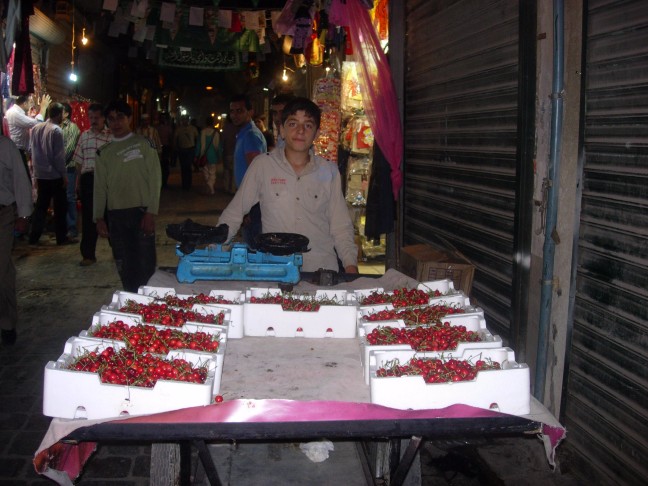
My friend Liz from Bath was the first to come in January 2009. Our visit to Aleppo was short but very sweet. The name of the modest B&B we stayed in is marked in either my Rough Guide or Bradt Guide to Syria which I don’t have to hand. But it was right in the middle of the old souq, off a side street, with its winter vines and blooms and array of traditional carpets draped over walls. It was cold and we enjoyed the hot street food on offer at every step through the souq, while we shopped for soap and other sundries (those particular photos seem to be lost, must ask Liz!). As in Lebanon, food was always everywhere in Syria. And it was damn good food, fresh and healthy and artisanal in its presentation. You could eat and eat and lose weight, and I did; even allowing for a fair share of cakes and sweets. The Citadel didn’t disappoint; a grand structure which you could survey at your leisure up close from one of the touristy cafés. In the evening we were regaled by musicians in the restaurant at 17th-century Beit Sissi off the historic Jdeideh Square, and tried to choose Aleppo specialties, like “Kebab Karaz”, kebabs made from minced lamb, cooked in a wild cherry sauce. The colours are spectacular, bleeding into the background of pale flatbread. Aleppo cuisine is among the best Syria has to offer (and the competition is fierce), with distinct Turkish and particularly Armenian influences.

By the time my (in those days) walking buddy from London, Joanna, arrived towards the end of May 2009, the souqs were offering shelter from the heat rather than the cold. We made the 4-hour coach journey straight up the vast highway (the “M-5”) from Damascus to Aleppo, stopping at Homs bus station on the way for what was effectively a great chip butty and conversation with Syrian fellow travellers. Our passports were closely scrutinized and recorded at every stage by the coach company staff, and passed on to the (not-always-so) secret police. No-one’s movements went un-tracked in Syria. It was (is) a police state par excellence. Still, as long as you kept your head below the political or human rights parapet, you could lead an exquisitely charmed life as an ex-pat – as I did – from your international wages and (for us) low cost of living. Public and private transport was dirt cheap and plentiful. Syrian people were gracious and tolerant. In Aleppo, we met up with my partner in crime from Damascus, Ludmila, who had two friends visiting from Switzerland. This time we sat outside Beit Sissi, taking a cold beer, before wending our way through the narrow back-streets to a superb restaurant in another restored Arab courtyard house called Kaser Al Wali. More obligatory Kebab Karaz and other mouth-watering meze and salads, all beautifully presented, washed down with some good Syrian red wine from the Orontes. The waiters were attentive and eager to please. The only down-side was the band playing “music for slitting your wrists to” (as Joanna put it).

Next morning, after a long breakfast al fresco of fresh strawberry juice, omelette, cappuccino, breads and pastries, we headed into the depths of the Citadel. It was delightful. I’d imagined a few rooms, but it turned out to be a whole spread of ruins: hammams, an amphitheatre, a (make-shift) roof terrace café with a wonderful view over the city. The whole place was steeped in romance, with young couples sneaking their hard-to-come-by trysts in every available corner in this conservative city.

As we wandered back through the souq, it was hard to make sense of our bare arms causing (male) tongues to hang out so much, when they were selling their brothel-like leather and latex underwear (for women of course) complete with zips, displayed for all to see.  I tried to engage some of the young guys in conversation in my limited Arabic – certainly limited for this subject – trying to find out WHO buys this underwear, and for WHOM? What I understood was it was for private use “bil beit” (at home). Again, you had to use your imagination to envisage the women walking past us in their long, heavy coats and hijabs/niqabs, donning that leather/rubber underwear. Syria used to be famous for its raunchy underwear. Maybe still is. Like many ex-pats, I spent more than a few hilarious moments with various accomplices in the souqs in Damascus, being served by a poker-faced vendor listening to the Quran in the background, clapping his hands in order to make the battery-operated, lacy thong I’d be holding fall apart. These items even found their way into birthday and other gifts given to me along the way. Bitter-sweet memories that contribute to my writer’s block. I wonder if this tradition has survived the conflict.

Further exploration took us back to the Christian quarter and to the boutique hotel “Dar Zamaria Martini”. I had read they had a stunning rooftop restaurant, but apparently it was being refurbished. A slightly-built, camp young man in a bright purple shirt led us up to the roof. I nearly fell off when he spoke in a distinctly London accent, delivering a tirade against French tourists which had us in stitches. Abed swore he had never been outside Syria, but that he always got to meet “interesting people” in the souq. It didn’t take long to discover his passion for theatre. Against the majestic backdrop of the city and citadel, he recited for us his own poem – in English – about unrequited love. It was impressively long with rhyming couplets and triplets. Highly entertaining and also moving. I wonder where Abed is now – if he is still alive. So much senseless carnage. And it would seem that Assad has “won”.

Later we headed for the train station, where Joanna booked her ticket for the next morning for Latakia and Saladin’s Castle to the west on the Mediterranean coast (I was planning to head east with Ludmila and co). Aleppo railway station was striking in its grandeur of days gone by, with ostentatious golden chandeliers hanging from the high-ceilinged waiting room. It was the end station for Agatha Christie during the years she travelled down from London on the Orient Express to join her second husband, Max Mallowan (14 years her junior), who was doing archaeological work in the north-east of Syria

After another foray into the main souq, we exited via Bab (Gate) Antakya and took a taxi to the Baron Hotel to join Ludmila and friends for a colonial gin and tonic in the bar. Reputedly, Agatha Christie was a frequent guest there, as was T.E. Lawrence (of Arabia). Contrary to the scathing write-ups in the travel guides, I found it atmospheric and charming, despite the kitsch. The guy on reception had allegedly worked there since 1975 and showed us a photo of him with Freya Stark in 1977.

Sadly, Joanna never got to make that most picturesque of Syrian rail trips from Aleppo to Latakia. When we returned to our hotel late that night, she received a call from home to say that her father had passed away earlier that day – while we were having our leisurely breakfast, she calculated. With the help of the receptionist at the Baron Hotel, we found a taxi to take us on the long drive south through the night back to Damascus. True to form, and in honour of her father, who had encouraged her adventurousness (and said if the men are behaving badly, THEY should be kept off the streets, not the women), she insisted we stop at the city of Hama on the way down, famous for its ancient wooden water wheels; and lest we forget, notorious for the massacre of tens of thousands of people in 1982, at the instigation of the father of the current President, Hafez al Assad. There were no instant internet or TV images in those days and it took days, even longer, for information to reach the outside world. How, in this age of instant communications do we ask Aleppo – and Syria – for forgiveness?

This slideshow requires JavaScript.

My new old house

After a two-month absence (3 weeks leave followed by 5 long weeks of sick leave, mostly in London, back and forth to the GP and Hospital for Tropical Diseases), I eventually returned to Kalemie, where my “new old house” was awaiting me.

When an Iraqi colleague announced a rather sudden departure in August, shortly before my own departure on leave, I was advised to “jump” and take over his house, given the shortage of suitable accommodation. Cue initiation into the weird world of “Filtisaf”. Filtisaf is the name of the former Belgian company that owned the big cotton mill on which the UN compound now stands. The company built a whole estate of large, one-storey villas with spacious gardens for its employees in the 1940s and 50s on the large tract of land at the top of the hill behind the mill. As far as I know, the estate was mostly inhabited by Belgian colonials, enjoying what was then a rather charmed existence in the pearl on Lake Tanganyika that Kalemie was then. Some of the villas have a splendid vista over the lake (not mine sadly). Following the turmoil of independence, almost all the Belgians were forced to leave and the company disbanded. In lieu of any kind of severance pay, the company decreed that the Congolese inhabitants of the estate could remain in their houses. Today there is an eclectic mix of Congolese locals, either political elites with their generators or ordinary folk in often derelict conditions, and UN and other ex-pats like me trying to reverse the dereliction, living side by side in a sprawl of mostly detached or semi-detached Belgian houses built in the 1950s. A remnant of Filtisaf still exists, run by a clique of Congolese out of the huge old mill with its high-ceilinged offices, rows of crumbling yellowed box files and black (brown) and white photos of a bygone era, intent on squeezing as much money as possible out of internationals like me in return for as little maintenance they can get away with. All executed with bureaucratic pedantry the Belgians would have been proud of. Granted, the rents are low compared to places like Goma, which makes investing in renovations for one’s own basic comfort seem less foolhardy.

Not without a certain sinking feeling, due to the lounge and kitchen being quite dark, I agreed to take on the house, which entailed coughing up a ridiculous amount for my Machiavellian Iraqi colleague’s belongings he left behind, including his action man DVDs and a washing machine that apparently had never worked (admittedly the TV and DVD player work, and the mattress from Uganda is comfortable).

I quickly realised it would take up inordinate amounts of time and energy to induce Filtisaf to renovate the ramshackle windows, doors and broken mosquito netting all around the ample perimeter of the house, so I commissioned a team from MONUSCO Engineering Section to carry out the works in my absence and at my own expense. I was satisfied to find the windows, outside doors and netting repaired to a good standard. The bathroom in the annex, where one of my security guards lives, had also been transformed with new toilet, shower and lick of paint, and they had replaced the dilapidated security gate. But as I expected, the myriad other internal jobs were mostly far from satisfactory, if done at all. I cursed as I scagged my clothes on nails and roughly hewn wooden handles sticking out from cupboards, and winced at the still grotty kitchen with its manky old wooden worktops and leaking sink – and non-functioning cooker with its original bulky 1950s Belgian plug. Still, despite the tiny ants marching across the walls in the bathroom, I felt grateful for the newly installed toilet, shower with pump (sheer luxury here), my bedroom with its lovely light and the luxury of a dressing room and another spare bedroom. Not the most practical of design with all three bedrooms leading into each other and the bathroom in the middle. But as I live on my own, it matters not! I have some decent beige linen curtains in the lounge and bedrooms and I can replace the other hideous, pink, flower-patterned fabrics with beautiful coloured materials in the local markets, which I will get round to doing one of these weekends; along with the scores of other jobs still to do…. And Filitisaf gave me the go-ahead to purchase a new cooker to be deducted subsequently from my rent (done and working fine, despite its weedy Made in Turkey stature) and new lounge furniture (not done).

Despite the fact that it’s semi-detached and I often hear my Congolese (politico) neighbours next door if I’m in the lounge/kitchen, and people randomly decide to play amplified music throughout the night, it’s my own private space and bolt hole and mostly quiet, so I am really not complaining. And I have a huge garden with a defiant solitary pineapple in the middle – a source of great mirth and rejoicing! (on the other hand it takes some getting used to having a dug-out hole in a corner of the garden as my bin – Veolia, all is forgiven!) I expected that with the onset of the rainy season from end of September the garden would burst into an oasis of luscious green, but the torrential rains just seem to get sucked up into the unforgiving sandy soil. However, as the rainy season lasts for not far off 8 months, there is hope yet for my dusty land. One of my guards turns out to be eager to transform it (and earn an extra buck). He has been turning over the soil and planting maize. This weekend I went with one of my other guards to a rather rough area of town, on a mission to buy gardening tools and seeds for celery, spinach, carrots, peppers, aubergines, onions etc. Frankly I’m not holding my breath (if you’ve read “The Poisonwood Bible” set in this part of the Congo?!), but it’s a fun project for someone who has never gardened in her life. Mission accomplished. I never dreamed this time last year that I would be bumping along a potholed road in the Congo with a wheelbarrow bouncing around in the back of a “seen better days” UN vehicle.

On leaving the dodgy part of town, we got caught up in a rather ugly scene, where some local policemen, having tried to arrest one of the myriad motorcycle taxis, were being roughed up by the locals. I felt sorry for them, knowing that the chances are they haven’t been paid in months! I closed the windows and locked the doors, hoping that the crowd wouldn’t turn on us. Eventually we were able to pass through and on our way. But it reminded me why I don’t go to that part of town on my own. In fact, the numerous conflicts all over Eastern DRC seem to be escalating at the moment. It’s kind of hard to take in that people are killing each other with poisoned arrows and burning people alive in their houses. But then how is that worse than a smartly-uniformed soldier under orders to press a button and eject bombs from a sophisticated aircraft onto innocent civilians below, knowing they will be incinerated in their homes and schools? For another time….

Back to my house: it’s quite big and rambling and a bit grumpy and grouchy for having been neglected for too long, but I am slowly coaxing it to yield its softer edges. I’ve promised it to replace the synthetic, leopard-skin covered furniture with some more dignified bespoke pieces, and grace it with some softer lighting. When I’m next on leave, I will commission some painting and tiling and get a few rugs and lamps/coloured baubles. Oh and rip the kitchen out (Filtisaf said they would do it, ha ha). This is the plan. In the meantime, it’s good ole candle-light, lying on the leopard-skin couch watching Poldark of a dark evening. Or sitting in an ancient but comfy deckchair in the long, covered veranda, garrisoned by the impressive new netting against the mosquitoes and a myriad other creatures that appear in sheer joy with the rains. What do they care if the electricity disappears with each spectacular storm? Thanks to my friends Liz and Pete, I am super-equipped with solar lights and charge. Annoyingly, a lot of the “before” photos got deleted when I synched my phone with my computer (I’d deleted the photos from the phone thinking they would remain on the computer). But there are plenty of snaps to give you a picture of my “new old house” and neighbourhood.

This slideshow requires JavaScript.

Respite in Uganda

This damn malaria is persistent. After four courses of treatment in Kalemie, Dr. Lucy, aka Dr. Bananas, decides to send me to Uganda to get checked and get some rest, even though I hadn’t long returned from my R&R. “You’re looking haggard”, she said. Thanks! I think it was more that she was fixated on me staying at the “Red Chilli Hideaway” in Kampala, a favourite haunt of hers. So the relevant letters were written to the UN “Regional Service Centre Entebbe”, and I set off on the Monday flight from Kalemie direct to Entebbe. On the flight I found one of my IT colleagues also going for medical treatment. He was coughing so hard through his mouth mask, I thought we’d have to give him oxygen. I’d also been complaining of a tight chest in the mornings, even though I am no longer smoking (well apart from the odd one!) We agreed there must be something in the air in Kalemie, given that quite a few colleagues are having respiratory complaints – probably dust.

I went directly to the UN compound (Regional Service Centre Entebbe) where the nurse arranged a consultation for me next day in Kampala. I also took advantage of being in the RSCE to commandeer some admin staff to help me deal with some personnel issues, like eventually filing the obligatory expenses report for my initial appointment. Those of you who know me well know my aversion to admin and bureaucracy. So I was immensely grateful to have some assistance with the endless scanning and uploading of documents, boarding passes etc. into the evil “Umoja” self-service system, which is about as intuitive as Donald Trump.

My Austrian colleague was on her way to annual leave and highly recommended the Boma Hotel for peace and quiet and a beautiful environment. Indeed it was an excellent recommendation. It’s a boutique hotel in a 1940s-built colonial house and the staff are incredibly kind and welcoming. The rooms are arranged around the gardens and the leafy internal patio.   There are two small restaurants, both outdoors but covered, one next to the pool at the back and another more intimate one overlooking the front garden and lit with oil lanterns. The food is really good, and they have dessert and CAKE!!

Next day, in the midst of a torrential downpour (harbinger of the rainy season to come), I set off at 7.30a.m. in a taxi for Kampala, for the private Case Hospital. Rush hour in Kampala is quite something; a chaotic flow of taxi motorbikes and cars and grumpy traffic police. Somehow it works. I noted again the influence of the ubiquitous Chinese in the city, as in Rwanda, although Kampala definitely feels more gritty and urban than Kigali. We reached the hospital just in time for my 9am consultation and within minutes, I began a series of tests: blood, urine, chest x-ray. While I waited for the results, I wandered around the hospital and did a spot of people-watching in the cafeteria on the top floor, while munching on salad and trying to access my work email.

It turned out that I was no longer testing positive for malaria, but they could see my system had been busy trying to fight it. Also, malaria can go into hiding for long periods and pop up again, so you need to be careful. The chest x-ray showed up signs of some kind of allergic reaction. This was disconcerting but at least provided a reason for the tight chest. I will follow up when back on leave in London. In the meantime, they gave me anti-histamine and an inhaler. That’s probably enough medical details for folk. I’ll spare you the rest!

I spent that night at the Red Chilli Hideaway in Kampala, much to Dr. Lucy’s satisfaction. It’s a large and sprawling hostel-type place, but with en-suite rooms too, at the very economical price of $40. It was clean and the shower was great. I also enjoyed having cocoa and banana cake in the afternoon. However, it didn’t quite do it for me in terms of atmosphere. Call me a snob, but I can do without witnessing tantrums from north Americans when their eggs don’t come sunny side-up! The Brits are just as bad insisting their toast is hot. Of course I never complain.

So Wednesday morning after another session at Case Hospital, I headed back to Entebbe and the haven of the Boma, where I slept for two days almost solid and ate a lot of cake in between – and some healthy stuff too. Friday came around far too quickly and reluctantly I headed to the airport to take the UN flight back to Kalemie. Upon arrival at check-in, I was informed that the Kalemie flight had been cancelled (the South African crew based in Lubumbashi party hard I’m convinced, given that this is the third time in three months they have been “sick”). I decided to take up the offer of flying to Goma. I like any opportunity to pass by HQ for Civil Affairs, even though I’m usually grovelling for forgiveness for late submissions or not knowing what’s going on (to be fair, it has to be said that there has been a not inconsiderable amount of being kept in the dark by my “butterfly” Congolese tandem, but enough said about that. (As I said, I never complain…!) And it’s always a delight to stay with the lovely Marion (French Civil Affairs colleague in the Goma field office).

The cancelled flight was rescheduled for Saturday morning and so in I came again to Kalemie for the next stretch of three weeks before heading off for my three weeks of leave followed by one week’s training.   In fact as I write this (backdated), I am sitting once again in the Boma in Entebbe, waiting to be driven to the airport for my flight back to London – via Dubai!  Holidays here I come 🙂 Looking forward to seeing family and friends.

This slideshow requires JavaScript.

More Barazas

Back to Mbayo

In August we returned to Manono territory for a celebration ceremony of all five baraza villages. People from each village had convened in Mbayo as a centre point and had been waiting for days for us to come. For us it was the usual two helicopter legs in this vast territory. With the malnourished children of Kabeke at the forefront of my mind, I arranged with UNICEF, UNHCR and OCHA (the coordinating UN agency for humanitarian affairs) to come with us to make some assessments. They are of course aware of these villages but they are really remote and so the only feasible way to get to them is by helicopter. UNICEF are already helping to finish the school building and health centres in Mbayo and Kabeke, and we are applying for “Quick Impact Project” funds to contribute to these and to supply “moulins” (mills for grinding corn) to all five baraza villages.

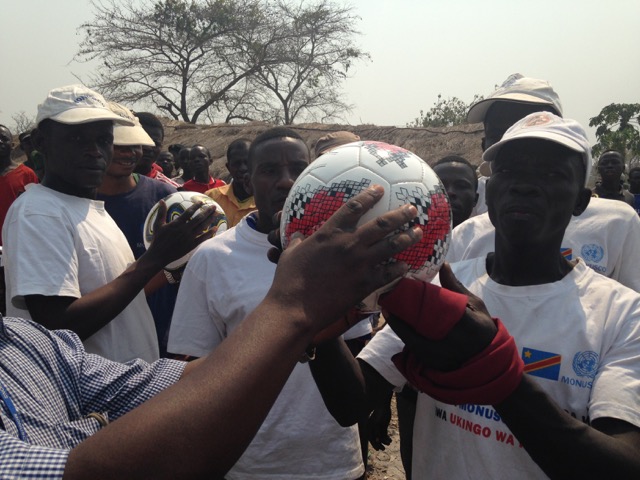
This time I brought a sack of leather footballs which one of my team had managed to source locally (surprisingly). Again, it felt like a pathetic drop in the ocean, but the gesture went down well. The provincial government authorities came with us and officiated the presentation of bicycles to each baraza. I couldn’t help cursing the Chinese again for their crappy products. I was pursued relentlessly by one woman who had discovered with dismay that her tyres were already flat and the pump had somehow got lost. I didn’t know the Ki-Luba for “blame the blasted Chinese”.

We arrived to an eager welcome of singing and dancing. With five villages convened in one, it was pretty crowded; children and young men climbed trees for a better view. Many women were in their “Sunday best”: elaborate dresses of bright oranges, reds and yellows. The customary chiefs stood out with their eclectic mix of western suits, traditional fur hats and whatever combo seemed to take their fancy. The female Minister wore the expected frilly frock and high heels. Standing next to her in my khaki lightweight safari trousers and clumpy walking boots, I felt like a frump. Still, I refuse to do frilly. Not for a field trip anyway! That said, I do plan to go clothes shopping in London when I’m back on leave and kit myself out with a few more formal outfits for political meetings. When we stepped out of the helicopter, the (male) Minister was presented with a terrified white chicken with its legs tied and a bowl of white eggs. These got handed over to my UNHCR colleague, much to my amusement, but not to his.

Despite all the setbacks and hardships – not least the lack of food and healthcare – there was nonetheless a sense of celebration and relief that they are not fighting each other anymore. Whether the peace will hold remains to be seen. In Nyunzu territory to the north, the Luba-pgymy conflict is flaring up again, reportedly stoked by the local security forces and political machinations, and there is already a spillover of displaced people heading south towards Manono.

It’s frustrating to see the humanitarian needs when we are not a humanitarian agency. But in Civil Affairs, we have big cross-mission liaison role, so we coordinate with humanitarian agencies and facilitate their work where we can.  What we do is to try to contribute to the long-term recovery of these communities, who are mainly in this awful state through conflict. So we literally work to help “build the peace” and make it take root, by engaging in conflict resolution and protection of civilians.  With a state that is so corrupt it’s an uphill battle though. The “army” – the FARDC – is a rag-tag mix of ex-combatants and soldiers and God knows who else who, because they are poorly paid and sometimes don’t receive their salaries for months on end, resort to harassing the local populations: erecting checkpoints, extorting money from them and much worse! The PNC – the national police, are in a similar situation regarding salaries and can also be a burden on the communities they are supposed to protect, although they are far more trusted than the army.  We have a few PNC “guarding” the UN compound at the front, alongside a private security company.  Just the other day, one of them (policemen) called to me through the fence as I was approaching my office and asked me for money.  I called a Congolese colleague to speak to him and explain clearly that they are not to do this, but at the same time I cringed at the injustice of someone working just alongside me who is probably not getting paid. The UN tries to support the state in improving both the army and the police, but as long as they have this quiet dictatorship, and a country still riven with armed groups (mai-mai) and hundreds of intercommunity conflicts over land ownership (lack of), ethnicity, as well as spillovers from neighbouring countries like Rwanda and Burundi, it’s hard to be over-optimistic about the near future. It amazes me, therefore, how up-beat the Congolese are. Great sense of humour, and you should see them on the dance floor!

Coming back to the Mbayo baraza celebration, it felt like a really worthwhile trip. Of course the politicians took full advantage of the occasion to splurge their propaganda on the people, but the very fact of their/our presence signalled that they were not completely forgotten. We took our Public Information section with us, who recorded the proceedings for a local radio station. I made a short speech in my best French (cobbled together on the helicopter with one of our Community Liaison Assistants), which was translated into Ki-Luba line by line. Once again climbing into the helicopter, hot and caked in dust, my legs felt creaky and weighted down. The next day I tested positive again for malaria.

This slideshow requires JavaScript.

Downtime

Lest I’ve given the impression it’s all work in Kalemie, let me reassure you there are regular opportunities to let one’s hair down, albeit (for me so far) limited to the community in and around the UN compound. Some staff members are lucky enough to have houses with a lovely view over Lake Tanganyika (I’m on the waiting list!), and colleagues issue invitations for dinner or parties at the weekend. And there’s always the over-priced Musalala hotel down the road where you can enjoy a beer on the shallow strip of beach at the back while the sun goes down. The breeze off the lake keeps the mosquitoes at bay.

The Bangladeshi military police were very generous during Ramadan and then invited some of us again to celebrate Eid al Fitr on 6th July. However, the atmosphere was marred with sadness at the horrible killings that had taken place in Dhaka the weekend before. It was the night of Wales’s stunning victory over Belgium, which I managed to miss by falling asleep. So the next morning was a mix of good news and bad. Actually every day seems to bring ever more depressing news from my beloved Syria, and Iraq and the whole region. I watched a BBC Newsnight report on Aleppo yesterday, and struggled to eat the food I ordered afterwards. Don’t mean to be maudlin…

During one of the happy hours in the cafeteria soon after my arrival, I got chatting to the Uruguayan contingent who have the contract for water purification here. I made no attempt to hide my excitement when they told me they cooked on their own make-shift barbecue, and true to their word they came and gave me a shout a few evenings later. I’m now a regular pizza scrounger at their place of a Friday evening, prior to making an appearance at happy hour. They are really laddish, work out a lot and sometimes keep us up all night with their loud music. But it’s impossible to get annoyed with them because they are so good-natured, and I do enjoy a bit of improvised salsa on their patio! They speak no word of English or French – or of anything other than Spanish in fact. So I communicate with them through Italian, which they mostly understand – I’d say about 85%, and I understand them about 70%. These are very unscientific estimates, I hasten to add. I’ve promised to do some English classes on the compound, but have been too busy with work and being sick. Probably won’t get to do this until I get back after my long leave in September.

Twice a week the Beninois soldiers lead a fitness class. I have made the grand total of ONE on a Saturday morning, which consisted of jogging up from the compound to the large football pitch-cum-everything at the entrance to the sprawling “Filtisaf” estate where many internationals live, interspersed with Congolese families who were “allowed” to stay when the Belgian company went into liquidation. I was the only woman and wimped out unashamedly on the push-ups. How I miss swimming! It’s exasperating being on the lake and not being able to go in. People do, but I think I’ve had enough physical challenges for now without getting some nasty parasite on top. Oh well, at least there’s the sound of the waves. I never tire of the sound of the sea. And this lake is so big, it feels just like the sea.

This slideshow requires JavaScript.

Bleeding heart?

I arrived back from my R&R on the Monday afternoon to find that I had been scheduled for a field trip next day. Despite the 6am start, I was keen to go, firstly as it was to another of the baraza villages in Manono territory, and secondly my stalwart Congolese Civil Affairs colleague Josianne was coming too. Josianne is petite yet voluptuous, and the queen of style. She wows me most mornings with her colourful and chic outfits, tailored by her sister, with matching head-dresses. Even for a field trip she adorned her leggings and t-shirt with a shimmering drape of orange. I had asked our section assistant to go and buy some footballs and pens, after our experience last time in Mbayo when we had nothing to give the children. He duly returned with a sack of rather poor quality plastic footballs for young children and a couple of boxes of biros. It wasn’t quite what I had in mind but we took them along anyway. We had the provincial Minister of Interior with us and the Minister for humanitarian affairs (and everything else it would seem) and we arrived in Manono to military salutes and traditional dancing. That strange juxtaposition of arch solemnity and unbridled human expression that is becoming familiar to me here. The mood was upbeat as we climbed back into the helicopter for the second leg of the journey.

Again, I wasn’t prepared. Kabeke is much bigger than Mbayo, and more isolated. Like the other baraza villages in the north east of the vast Manono territory, it was ravaged by inter-community (Luba-pygmy) conflict in recent years, but somehow the food situation is much worse. The state of the children was shocking: stick thin legs, distended bellies. I tried to smile back at them as we entered the village apace, but I was immediately aghast at what I later learned was ringworm on the top of their heads. I walked clumsily behind them trying to surreptitiously photograph the weeping sores on their scalps as we went. All through the baraza proceedings, I tried to focus to the front, but I couldn’t stop myself turning round in my blue plastic chair to survey the mass of undernourished bodies behind and to the side of me. Thankfully Josianne was making notes. I felt a huge fool with the plastic footballs and biros, and I felt appalled that we were making them listen to speeches about peaceful cohabitation when they were showing signs of starvation. Was I the only one seeing it? It felt surreal. One little boy in a dirty orange short-sleeved shirt with his arms raised coyly above his head caught my attention. I was transfixed by the beautiful expression on his face: curious, dignified and almost flirtatious. I decided to risk the inappropriateness of taking photos. I needed to capture this. Next to him, another little boy stood with his bare swollen stomach pushing out his belly button. The little girl on the other side of him also had a swollen belly under her ragged top. I sat there squirming with my designer sunglasses and expensive water filter bottle.

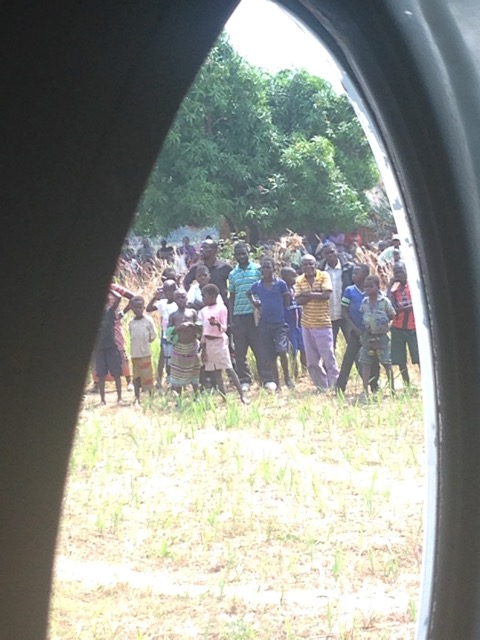
As we were taken to see what remained of their medical centre, with children pressing in on all sides, I frantically tried to ask as many questions as I could of the “civil society coordinator” for the Manono area, who has been key in setting up these barazas. Abbe M is a priest and intellectual (I’m told) and a tireless advocate for peace and development. I was trying to understand why they were not growing food. As time was short, I gave up and started to ask the women (via Abbe M) what simple things might make an immediate impact (we are not a humanitarian organization). They told me “les moulins”: hand mills for grinding corn. I have this in mind now (along with proper footballs). No doubt there will be a whole series of bureaucratic hurdles to navigate in order to get and deliver them. Sometimes I think I am naïve. Or worse: a self-indulgent bleeding heart. What was discussed in the actual baraza forum is now a blur. All I remember is being irritated again when a woman in a red headscarf started talking passionately to the Ministers and people started talking over her. I was fixated with those children’s scalps and bellies, the hand mills and how to get the humanitarian organisations to come with us next time. It was time to leave and we climbed into the helicopter dusty and parched. The feeling of being a voyeur stuck to me like my sweaty vest, as I looked back at the villagers through the oval aircraft window.

This slideshow requires JavaScript.

R&R in Rwanda

Finally on the Monday after the funeral, on my second attempt, I flew out of Kalemie for my much-needed rest and recuperation. I knew a week would fly by, and it did. Nonetheless, I felt very grateful for the reprieve. As planned, I passed by Goma HQ and spent the afternoon in meetings. Six weeks in, the information and language – and endless jargon and acronyms- now had a context and were becoming more meaningful. A French colleague, Marion, in the Goma Field Office (as opposed to HQ) kindly put me up in her flat. My German colleague Miriam (from CPT training cohort) came and picked me up to go for dinner and I was delighted that our Kenyan colleague Irene was also joining us. It was a joyful reunion and I fell hungrily on the salad and fresh food in the lovely Nyumbani restaurant above “Au Bon Pain” bakery. I agreed the chocolate mousse was probably the best in town, even though I haven’t tried any others! Miriam and I planned our visit to Kigali for the coming weekend.

After a great night’s sleep at Marion’s, I was introduced to her cook and housekeeper, a radiant Goma guy, who produced the most wonderful salad for me at lunchtime. I was in heaven! In the afternoon I migrated over to Kivu Lodge, the restaurant and boutique hotel on the lake popular with ex-pat/UN bods like me. I’d booked in for the night so I could treat Solange to dinner, as it’s her neighbourhood. The stay in the “budget” room was disappointing (stuffy, lacking privacy and noisy from 6am, being next to the kitchen), but the dinner was great. I had the duck again and as many vegetables as I could squeeze out of them. Solange brought along an American research colleague who works on certain types of malnutrition. It was good to spend time with these seasoned Congo women and academics.

The next morning, rather groggy and grumpy after a too-short sleep, I vacated my room and ordered a (rare) taxi to the border and literally crossed on foot into Gisenyi, Rwanda. The process of getting the exit stamp from DRC, followed a few metres down by getting the entry stamp for Rwanda, reminded me of the times I used to travel from Damascus to Beirut and back (by taxi), except it was quicker. I was lucky there were no queues to speak of.  My simple plan was to head for the upmarket Serena hotel in Gisenyi. I probably would have decided to take a taxi if I’d known it would take me almost half an hour to walk. Nevertheless, it was interesting to do so. Suddenly the road was perfectly paved with trees on either side, and neatly uniformed motorbike taxi riders buzzed around in both directions. I met a group of teenage schoolchildren and asked them the way to the hotel. They answered me without hesitation in English.

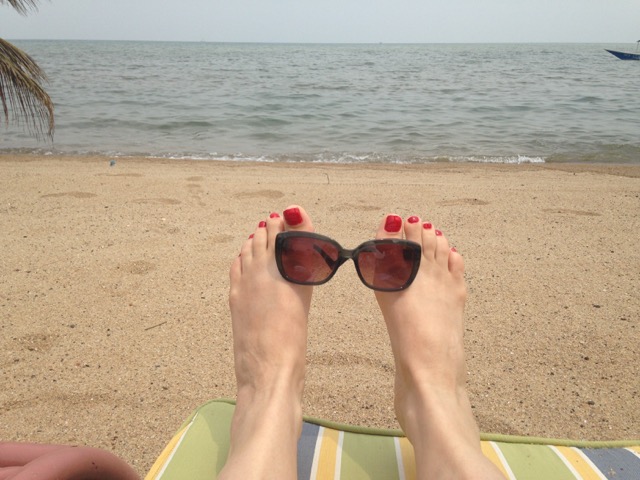
By lunchtime I was installed in my suite of rooms in Serena hotel, with a sun terrace partly overlooking the gardens on one side and the lake (Kivu) and hotel beach on the other. I immediately ordered a big salad and some fresh watermelon juice from room service and unpacked my suitcase. Bliss. The décor was very eighties but somehow I quite liked that. It felt rather decadent having a suite of rooms, but after being cooped up in my single compound room in the guesthouse in Kalemie for the last six weeks, having some space felt restorative. As did the spa treatments I embarked upon shortly after lunch and continued the next afternoon. The young woman, Denyse, who I worked out had been born in 1994, the year of the Rwandan genocide, took her time, and I soon relaxed, seeing my weary feet and hands transformed into human shape again, and drifting off to the soothing salon music during my massages. I have mainly felt the effects of malaria in my legs, which feel like they are weighted down and need some WD40 in the knee joints. So the leg and foot massage was just the ticket. I wasn’t overly impressed with the food at Serena, apart from the breakfast, which was ample. But still it was good to have some variety and I persisted in getting them to give bigger salads and more leaves and green things. I was enjoying the anonymity of a larger hotel, and had my first soak in a bath in two months. Thursday I swam in the pool. It felt so good to stretch out. I miss Brockwell Lido back home, and my bike ride through the beautiful park to get there. I decided against swimming in the lake, even though I was told it’s fine to do so. Hearing stories of nasty parasites (not to mention crocodiles and hippos!) in Lake Tanganyika has made me paranoid.

In the evening I tried to get my blog up and running. My good friend Dave from distant teaching days in Milton Keynes, had kindly procured the domain for me and set up a template with some example posts and photo gallery, but my tired brain mounted huge resistance to navigating this new technology. I sent some grouchy emails to Dave, who gallantly responded, but the rot had set in. After several failed attempts, I went out onto the balcony to try and clear my head – and duly locked myself out. The sliding door had no handle on the outside and I had hastily shut it all the way to stop the evil mosquitoes and any other undesirable bugs getting in. I pummelled in vain on the glass and called out into the darkness of the garden (I was on the second floor). Ok, I admit I cried. Eventually, a very large Frenchman in a white bathrobe emerged from his ground floor room for a (not-so) sneaky fag and raised the alarm. Thank God for smokers!

Friday came around speedily and it was time to leave. I’d contacted the taxi driver recommended by Marion to pick me up at 2pm and we headed back the short stretch to the border to pick up Miriam and her German friend Christoff. Miriam is usually late. I like that in a German; breaking stereotypes is a good thing. So at 3pm we set off for Kigali, with me taking the liberty of occupying the front passenger seat. There are some advantages to getting older. I was amazed by the flawless condition of the road for the whole 200km stretch. A lot of international has money gone into these roads, apparently. The scenery was breathtakingly beautiful: glinting silvery roofs on either side of the road against the backdrop of a restful landscape of mountains and trees. There were lots of people in brightly coloured clothes walking on the side of the road, which often had pavement/pedestrian space even if not raised. Still, I felt nervous at the speed of the traffic through these populated areas. It’s just one long single carriageway all the way. The conversation was cheerful and slipped between English and French and German, with a bit of Swahili thrown in.

As it’s wont to do, the sun fell out of the sky promptly at 6pm and darkness descended with us into Kigali and the Friday rush hour (which didn’t feel very “rushed”). On some recommendation from friends of Miriam, I’d booked us two rooms in Hotel 2000, which at $80 a night is good value in Kigali. It was like stepping into China. We all know China is taking over Africa and it’s very visible in Rwanda. I don’t object to the presence of Chinese (except when they watch films on their mobile phones at their restaurant table next to mine), but I’m not a fan of their products – meaning it’s usually cheap shit that doesn’t work or breaks. The atmosphere of the large rooms was somewhat cold, but the beds were comfortable enough and we only wanted somewhere to lay our heads. Breakfast next morning was a dreary affair. The food was frankly revolting and they had managed to convert the spacious terrace into a stark grey GDR-style square with huge (anti-) pigeon spikes poking up rudely from the rough concrete perimeter wall.

Two days are obviously not enough to get to know a place, but we certainly got a flavour. I loved the hills all around Kigali and the widened space of being back in a city again. Kigali has the reputation of being very orderly and law-abiding, and certainly on the surface of things, this rang true: roads, traffic lights, signs, shopping malls, no plastic carrier bags allowed. To me it seemed rather super-imposed though (and cars didn’t voluntarily seem to stop at zebra crossings) Shortly after arriving, Miriam and I concurred that we were struck by something strange: a kind of uneasy over-politeness in the people we were interacting with, resulting in disjointed communication, despite their excellent command of English and French. I compared it to when there’s a delay on the phone-line. I’d become aware of it already in Serena but put it down to the formality of large hotels. Granted, we were mainly dealing with people in shops, hotels and restaurants, but nevertheless I was registering something distinctly odd. By Sunday evening, I wondered whether I had discovered the reason for this.

Back to Friday evening, after a quick consultation with Marion’s fun tip-smattered map of Kigali and TripAdvisor, we ordered a taxi to take us to an area of town where there was meant to be a street known as restaurant row. All taxi rides in Kigali seem to cost 5,000 Rwandan Francs (about 6 USD), regardless of distance. Our driver offloaded us outside the only restaurant he seemed to know on an otherwise dark road. Street lighting is noticeably subdued. From there, we picked our way in the semi-darkness to what seemed more like a quiet residential road than the pulsating urban street with outdoor tables and bars we’d envisaged. The quick choice we decided to make was a good one: a French-style restaurant called “l’epicurien”. We sat in the quiet garden in one of the curtain-adorned booths and I agreed with one of the reviews I’ve read that the service was attentive but not intrusive. The food was great and I was all ears as Miriam narrated some of her Goma adventures. She is 30 and extremely attractive, which tends to translate into man issues. I’ve discouraged her from visiting my field office in Kalemie, as I know for sure it would cause an “incident” or ten!

The day passed quickly on Saturday, shopping for sundries and a new phone in the morning (to replace the “toy” Chinese one I bought in Kalemie) and sunglasses for Miriam, then a leisurely lunch in “Bistrot” restaurant, which was worth the wander for the lovely views and food (good burgers and salads).  After an early evening beer on our Communist terrace, I left Miriam to a night on the town with a couple of guys she knew from Goma, while I slaved away at my blog in my room, determined to take advantage of the fast internet speed and conquer my technophobic aversion that had solidified around it. And it worked! I stayed up till 3am, uploading lots of photos into several posts which I discovered I could backdate.

The all-you-can-eat brunch we planned for Sunday in a gorgeous venue called, appropriately, “Heaven”, was all we wanted it to be and more and felt like a nice reward and perfect way to round off my R&R. The outside tables with their cheerful tablecloths looked out onto yet more hilly views, and the weather was warm but breezy. After a couple of artisan craft purchases on the way out, we headed in a taxi over to the Genocide Memorial Center. You can’t visit Kigali and not do this. So it was from heaven to hell. I may know more than Josephine Bloggs about the Rwandan genocide, but I had no idea about how long it had been in the making, dating back to colonial times and even earlier. The presentation of it is well thought out. Nonetheless, as we progressed along the storyline and photographs, it became more and more horrifying. The scale of the cruelty and brutality was hard to take in. Yet again, it makes me ponder on the power of words and the way that language can be used to whip up mass hatred, or simply to wound a person’s soul in a moment of carelessness or callousness. Coming out of the memorial center, I reflected on the image that one of my favourite writers, Parker Palmer, uses to describe the soul: a shy wild animal in the forest that will flee/retreat if threatened or injured. Rwandan children and others who survived the genocide witnessed the slaughter of their families in front of their eyes. How could their souls not have fled? I think they are still travelling back, slowly. Hence the disjointedness?

This slideshow requires JavaScript.


An unexpected funeral

Like everyone else entitled to “R&R” (rest and recuperation), I was counting down the days in my sixth week till I could finally head off on Friday and sleep and eat good food. I hatched a plan of passing by Goma HQ for the afternoon to catch up with my Civil Affairs colleagues there and take Solange for dinner to say thank you for hosting me so generously last time. After a day or two, I would head over to Rwanda, although with no definite plan. With my small carry-on suitcase economically packed and my not-so-economically packed computer rucksack, I was driven to Kalemie airport down the road by one of my team, where, after a quick check-in, I flopped in a chair with a cup of tea and a (rare) cheese sandwich, enjoying the sense of anticipation and responding to looking-forward-to-seeing-you messages from the Goma folk on Whatsapp. An hour later the same team member came to pick me up to drive me back to the office. “Hi Julia, how are you?” said Terry in charge of movement of personnel at the airport, with her customary beautiful smile. “Fine, thanks Terry, how are you?” I responded benevolently and unsuspectingly. “I’m sorry, but you can’t travel today,” she followed. Yep: I’d been bumped off the flight! It happens a lot. The aircraft to Goma is very small, and as going on R&R is considered low priority, I was one of the three passengers chosen to give way to the ex-combatants being flown out last minute. Damn it! If these guys have been hiding out in the bush all this time, why can’t they wait another few days, the thought flashed through my mind.   Maybe my early morning meditation is starting to take effect, because after the split second of wanting to rant and rave, I quickly accepted my fate and shuffled back through security and out into the waiting hall, leaving behind me the scene of the two other forced “débarqués” (both military guys) protesting vociferously. Sigh. Another weekend in Kalemie; another Friday evening happy hour in the cafeteria with the insanely loud and repetitive electronic dance music mix thing along the lines of Cher’s “Believe” that young Congolese seem to love. Fortunately, some ex-pat colleagues who live in real houses behind the compound, invited me for a simple supper and I slept over in the house of a Lebanese colleague who had gone on leave and kindly offered me to stay as long as I wanted. As it turns out, one of my French colleagues is also a fan of Philippe Jaroussky (WHO?!), baroque counter tenor par excellence, and I introduced my beloved “l’arpeggiata” into the mix (South African group whose jazz renditions of Purcell make me jump for joy – yes, it’s a bit “niche” I admit!). In the end, it was a good thing I stayed behind for the weekend, as the “final” draft report Maheshe had sent me along my way with to review, proved to be nowhere near final. At 9.42pm Sunday evening, we submitted it – late as usual.

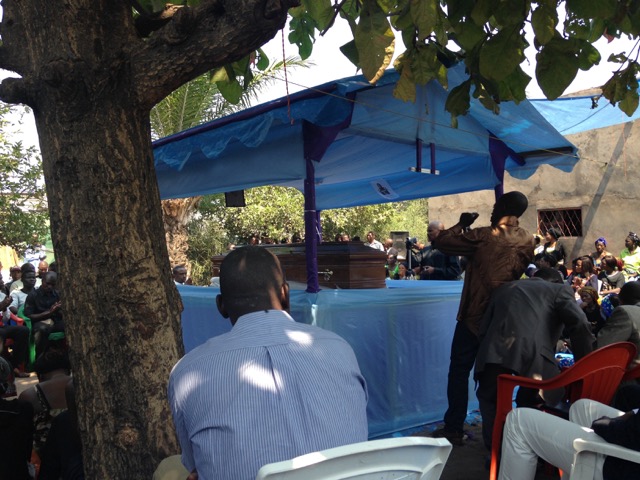
Funeral

Another reason I was glad I had to stay behind was that I got to attend the funeral of the (almost) 14 year-old son of a Congolese colleague in security. I never met him. He had died of a tumour the weekend before in hospital in Kinshasha, and it had taken a week to fly him home. A large number of us went to the airport on the Saturday to welcome the body back. The women were crying en masse, seemingly also on behalf of the men. My colleague’s wife and other relatives arrived in the plane with the coffin. My colleague was standing waiting for the van to pull up. As I watched his tired drawn face, I thought he had aged ten years in the last week. The weekend before, he had kindly taken me to view a house and only when he dropped me back did he mention that his son was undergoing surgery that day in Kinshasha. I couldn’t imagine anyone back home finding any head or heart space to worry about some foreigner looking for accommodation while their son was critically ill. The next day – Sunday – we heard the news that the son had not survived. I went with other Congolese colleagues to the family home where relatives and neighbours were gathered. My bereaved colleague sat on a sofa in the yard surrounded by a motley collection of old armchairs occupied by mostly male friends and family. I don’t know him well but instinctively I embraced him and ended up holding him for some long moments. Here, emotion on the part of women is expected and accepted so I cried without shame (not that I don’t normally anyway I suppose!), then took my place in the circle of men. Behind us more people sat on benches and low stone walls, including the father of my colleague, who was crying one minute for his deceased grandson then smiling the next as he bounced another toddler grandchild on his knee. I felt their visceral acceptance of death as part of life. My colleague took me inside the house to meet his mother. She was lying on the concrete floor with other women, most of whom were crying, some wailing loudly. There were small children among them, seemingly unfazed and doing what small children normally do. Some women were sitting up; some were lying on their side or face down under a blanket. I gave my condolences to my colleague’s mother, which were translated in to Swahili, then went back outside to resume my place among the men. As I find often in the Middle East, “western” women are accepted as token men, which is quite a privileged position. I knew the feeling of intrusion I had in the intimate setting of the women was a cultural construct, but somehow my instincts took me back into the open air. I sat for a couple of hours and then took my leave.

One week later, I was back at the family home for the pre-burial service, which lasted a couple of hours and entailed a lot of African choral singing. Again, everyone was out in the yard and it was packed. Thankfully there were some large trees to shelter us from the mid-day sun. Still the men and women were separated. My colleague’s wife was lying down on the floor against a wall, being propped up and attended to by other women as she wept and cried out. Again I noted the lack of tears from the men. So is it universal then that men are not “allowed” to cry in public? There were prayers and a brief tribute to the dead boy, then we all shuffled out to head down the dusty lane to the rather steep-sloped cemetery. Some colleagues got into their cars; some of us continued on foot. Up at the cemetery, close relatives and friends went to the grave for the interment of the body, while we stood back on the lower part of the slope chatting under the trees. I was glad that I had been able to take part in this rite of passage and I began to feel a more integral part of the community here. How I love community! It’s the only way to become fully human and we neglect it at our peril.